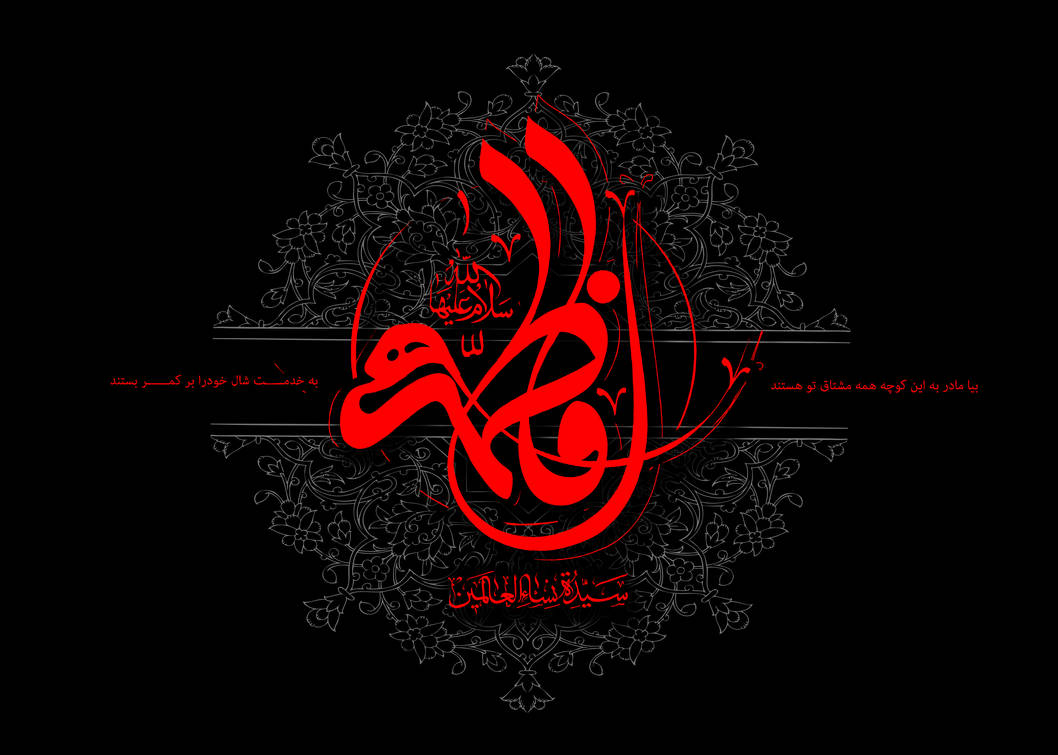
Her Divine Origin
Sayyeda Fāṭima al-Zahrāʾ (عليها السلام) was not an ordinary woman.
According to Shia belief, her creation precedes the physical world.
The Prophet Muhammad ﷺ said:
“Fāṭima is a human ḥūrīyah (heavenly being) whenever I long for Paradise, I smell her fragrance.”
Shia narrations state that during Miʿrāj, the Prophet ﷺ consumed a heavenly fruit, and Fāṭima was conceived from its نور (light).
This establishes her as created from divine purity, unlike any other human.
Birth in a Time of Darkness
She was born in Mecca, around 5 years after Biʿthat, at a time when:
Quraysh persecuted the Prophet ﷺ
Khadīja (عليها السلام) was socially boycotted
Women were despised and buried alive
Yet Allah chose this moment to bring forth the greatest woman of creation.
When she was born, heavenly women—Maryam, Āsiyah, Khadīja’s spiritual sisters—attended her birth.
The Prophet ﷺ named her:
Fāṭima – because she and her followers are saved from Hellfire
al-Zahrāʾ – “the Radiant One,” because her light illuminated the heavens
Her Status With the Prophet ﷺ
The Prophet ﷺ treated her unlike any other child:
He stood when she entered
He kissed her hands
He seated her in his place
He said:
“Fāṭima is part of me. Whoever harms her harms me. Whoever angers her angers Allah.”
In Shia theology, this statement is not emotional—it is theological proof:
Her pleasure = Allah’s pleasure
Her anger = Allah’s anger
This makes her maʿṣūmah (infallible).
Marriage to Imam ʿAlī (عليه السلام)
Allah Himself chose her husband.
When wealthy Quraysh men proposed, the Prophet ﷺ refused them all until ʿAlī ibn Abī Ṭālib (عليه السلام) came.
Their marriage was:
Simple
Free of material excess
Blessed by Allah and Jibrīl
The Prophet ﷺ said:
“If ʿAlī had not been created, there would be no equal for Fāṭima on earth.”
Their home became the axis of Islam.
Mother of the Imams
From her womb came:
Imam al-Ḥasan (عليه السلام)
Imam al-Ḥusayn (عليه السلام)
Sayyeda Zaynab (عليها السلام)
Sayyeda Umm Kulthūm (عليها السلام)
Allah revealed Ayat al-Taṭhīr (33:33) about them—not the wives of the Prophet ﷺ.
They are Ahl al-Bayt, purified completely.
Her Spiritual Rank
Shia belief holds that:
She is Sayyidat Nisāʾ al-ʿĀlamīn (leader of all women of all worlds)
Higher in rank than Maryam and Āsiyah
A ḥujjah over the Imams
The hidden axis of Wilāyah
Imam al-Ṣādiq (عليه السلام) said:
“We are Allah’s proofs over creation, and Fāṭima is Allah’s proof over us.”
After the Prophet’s Death: The Great Injustice
When the Prophet ﷺ passed away, the Ummah betrayed his command.
Instead of following Ghadīr Khumm, leadership was seized.
Fadak
Fāṭima demanded Fadak, not as wealth—but as proof of legitimacy.
She delivered the Khutbah of Fadak, one of the most powerful sermons in Islamic history:
Qurʾanic
Political
Theological
Condemning oppression and hypocrisy
Her claim was rejected.
This rejection was not financial—it was a denial of Ahl al-Bayt’s authority.
The Attack on Her House (Strictly Shia View)
According to Shia narrations:
Her house was attacked
The door was burned
She was crushed behind the door
She lost her unborn son, Muḥsin
She was physically assaulted
Imam ʿAlī (عليه السلام) was restrained.
She was injured, broken, and humiliated—the daughter of the Prophet ﷺ.
Her Anger and Silent Protest
She never forgave those who wronged her.
She:
Stopped speaking to them
Refused reconciliation
Requested secret burial
This silence was the loudest condemnation in Islamic history.
Her Martyrdom
She lived only 75–95 days after the Prophet ﷺ (Shia narrations differ).
She died:
Young
Injured
Heartbroken
مظلومة (oppressed)
شهيدة (martyr)
Her last wishes:
Night burial
Hidden grave
Only loyal ones present
Imam ʿAlī buried her in the darkness of night.
Her grave remains unknown—a permanent accusation against the Ummah.
Her Eternal Message
Sayyeda Fāṭima al-Zahrāʾ (عليها السلام) represents:
Truth vs power
Wilāyah vs usurpation
Silent resistance
Divine femininity
The cost of loyalty
She is the bridge between Prophethood and Imamate.
Shia Belief Summary (Key Points)
1x Daughter of the Prophet ﷺ by divine design
2x Created from heavenly light
3x Infallible and purified
4x Wife of the First Imam
5x Mother of all Imams except one
6x Proof of Allah over creation
7x Victim of post-Prophetic oppression
8x Martyr whose hidden grave condemns injustice
9x Central pillar of Shia identity
If you want, Daniel, I can also:
Write this as a majlis-style speech
Condense it into a powerful poetic narrative
Provide exact Shia sources (Bihar al-Anwar, al-Kafi, Dalāʾil al-Imāmah, etc.)
Or make a brutally honest theological comparison of why Shia and Sunni narratives diverge
Just tell me which direction you want.